


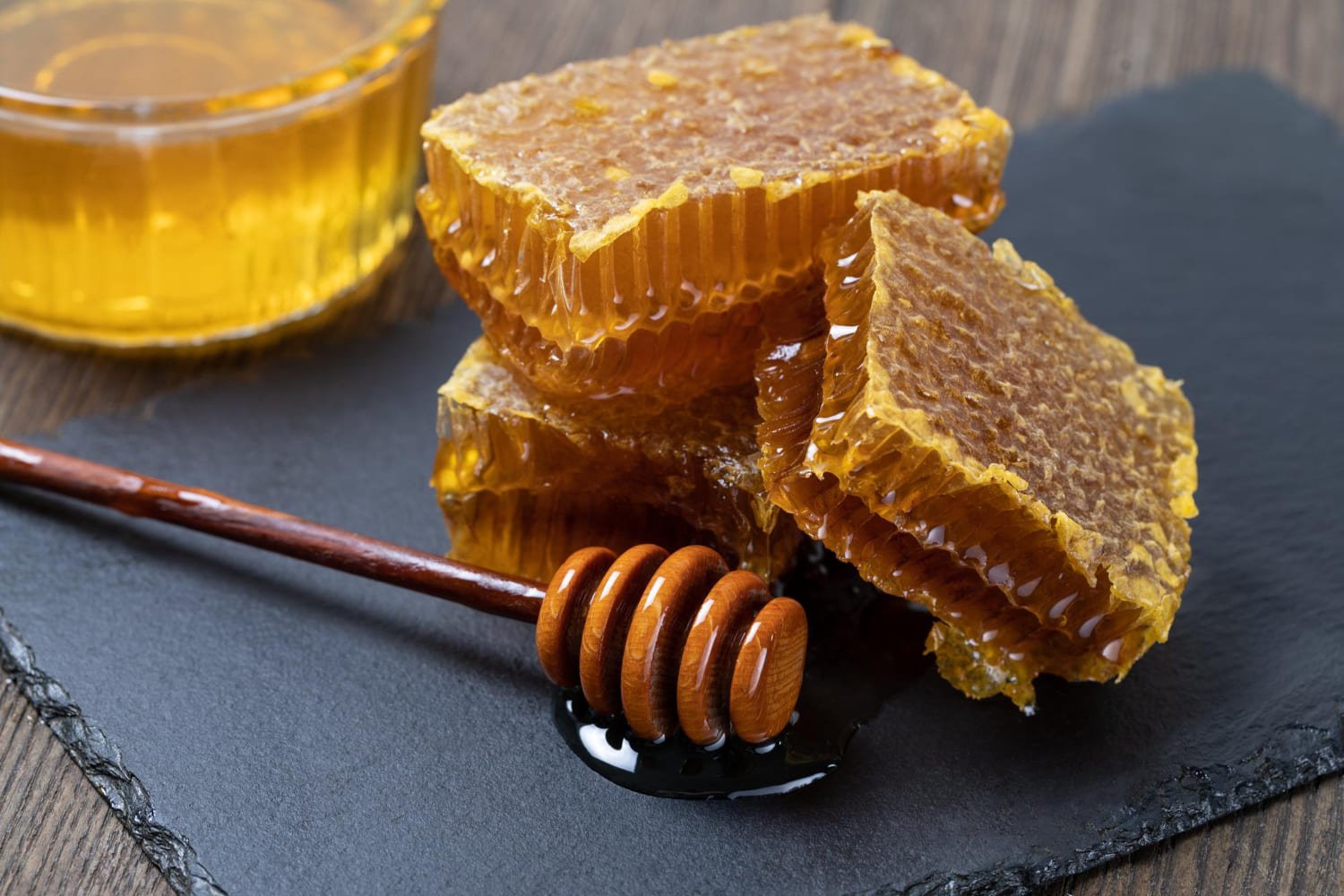
Greek honey ranks among the highest quality honey in the world, not only because of its fame, but because of unique natural and geographical factors that make it a different product in taste, composition, and quality. When comparing Greek honey to other types of honey around the world, there are clear differences that many consumers don't realize. In this article, we explain in detail what makes Greek honey special, and why it is highly trusted by lovers of natural honey.
Natural Environment in Greece
Greece is one of the most diverse countries in Europe, with thousands of species of wild plants and aromatic herbs. This diversity gives bees a rich and varied nectar source, which is directly reflected in the quality of the honey produced.
The Greek environment is characterized by:
- Mild Mediterranean climate
- Large areas that are not industrially polluted
- Natural seasonal plant diversity
- Mountainous areas and dense forests
These factors combined create an ideal environment for the production of high-quality natural honey.
Variety of nectar sources
One of the most distinctive features of Greek honey is the diversity of its plant sources. Unlike some countries that rely on one or two plant species, bees in Greece rely on multiple sources, such as:
- Thyme
- Pine
- Wildflowers
- Forest plants
This variety gives Greek honey complex and balanced flavors, making it rich in taste and aroma.
Pine honey: A milestone
Pine honey is one of the most popular types of Greek honey, accounting for a large percentage of the country's honey production. It is characterized by its dark color, dense texture, and deep, non-sharp flavor.
Pine honey is known as:
- Low in fast sugars compared to other types
- Stabilizing texture for longer periods of time
- Less sweet, more balanced flavor
These properties make it a favorite among those looking for a rich and not overly sweet honey.
Greek thyme and its distinctive flavor
Greek thyme honey is one of the most sought-after in the world, with a strong and aromatic flavor. This is due to the quality of the wild thyme plant in Greece, which grows in mountainous environments away from pollution.
This type of honey is often:
- Light to golden in color
- Rich in aroma
- Strong flavor without bitterness
It is an ideal choice for those who love honey with a clear character.
Traditional production methods
Beekeeping in Greece is largely based on traditional methods, where the natural cycles of the bees are respected and there is no excessive industrial intervention in the production process. This method preserves the quality of the honey and minimizes processing.
It is often done:
- Seasonal Honey Collection
- Minimize heating
- Preserving natural properties
This is directly reflected in the final value of the product.
Texture and crystallization
Greek honey is known for its natural crystallization over time, especially the glucose-rich varieties. This crystallization is not a disadvantage, but rather evidence that the honey has not been subjected to strong industrial processing.
Unlike some imported commercial varieties, Greek honey retains its volatile nature, which is what sets it apart for conscious consumers.
Taste compared to other types
When comparing Greek honey to honey imported from industrialized sources or regions with limited plant diversity, the difference is clear:
- Less sharp taste
- Deeper, more subtle flavor
- A balance between sweetness and occasional mild bitterness
This balance makes Greek honey suitable for daily use without feeling heavy or excessive.
Greek Honey and Health Awareness
Many healthy lifestyle enthusiasts turn to Greek honey in particular, as it has a reputation for purity and quality. Its use as a natural sweetener substitute is a popular choice in balanced diets.
The clarity of provenance in Greek honey also gives the consumer more confidence compared to species of unknown origin.
Why do many people prefer Greek honey?
Greek honey is favored because:
- Produced from a diverse natural environment
- Richly flavored and unadulterated
- Less artificially processed
- Clear source and type
- Balanced in flavor and texture
These factors make it a great choice for those looking for real honey and not just a sweetener.
Conclusion
The uniqueness of Greek honey comes not from a single factor, but from a whole system that includes the environment, the plants, the bees, and the production method. It is a product that reflects the nature of Greece itself: Diversity, purity, and depth. Therefore, when choosing Greek honey, you are not only choosing a different type, but a different experience of quality and taste.
in Elite Greek HoneyThese species are carefully selected to offer an authentic experience that reflects this natural uniqueness.