


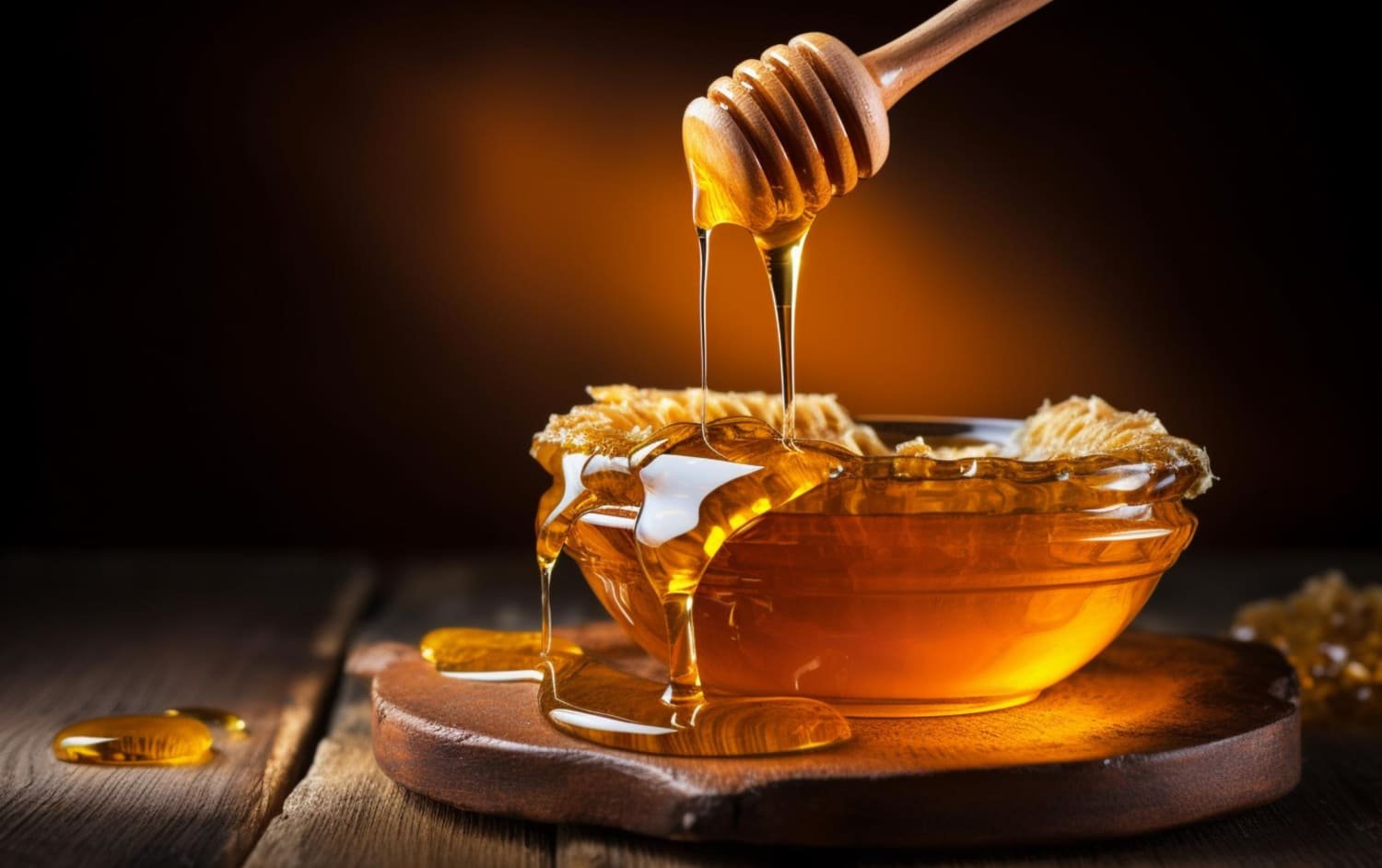
The honey market is one of the most confusing markets for many consumers, because honey is a natural product by nature and is variable in color, texture and taste, which makes some people think that any difference means adulteration, while the difference may be a natural sign of quality. On the other hand, there are indeed adulterated or low-quality varieties that are sold under the name “natural honey” in order to increase profits. In this article, you will learn about the most common and realistic ways to distinguish genuine honey from adulterated honey, explaining what is actually reliable and what is simply inaccurate information.
First things first: Understand what is meant by “adulterated honey”
Adulterated honey doesn't just mean one type of honey, but more than one:
- Honey with added sugar syrup (glucose/fructose) or other sweeteners
- Honey mixed with low-quality honey without explanation
- Honey that has been overheated and over-processed has lost its natural properties
- Honey of unknown origin or unclear type sold as “premium”
- Honey that was poorly stored and then marketed as natural
Understanding these types is important because “cheating” is not always obvious to the eye.
II: The Most Reliable Tags Before Buying
Source and type clarity
Genuine honey is often clearly labeled: Type of honey, country/region, and nectar source (e.g. thyme, pine, flowers). Products with a generic phrase like “natural honey” without details are often less reliable.
Transparency in description
A reputable seller states the characteristics of the honey as it is, including the possibility of natural crystallization or color variation from batch to batch. “Always perfect” honey with the same color and consistency may have been processed or added to it.
Clear filling data
History, net worth, memorization instructions, and clear communication. These are key indicators of professionalism and reliability.
III: Sensory indicators after receiving the honey
Natural texture is not a single criterion
Native honey can be liquid, thick, or crystallized depending on its type and storage temperature. For example, some types crystallize quickly and some stay liquid for a long time. So don't rely on texture alone as a guide to authenticity.
The smell gives you a strong signal.
Genuine honey often has a natural odor associated with plants. It may be herbal, floral, or woody. Adulterated or highly processed honey may have a very weak or almost non-existent odor.
The taste is gradual, not just sweet
Real honey is not “liquid sugar”. You'll often find layers of flavor: First sweetness, then a floral character, and depending on the source, there may be a slight trace of bitterness or acidity. Adulterated honey is often straightforwardly sweet and flat with no depth.
IV: Crystallization... when is it normal?
Natural crystallization occurs when the sugar structure of honey changes, which is very common in real honey, especially the glucose-rich varieties.
If your honey crystallizes within weeks or months, it doesn't mean it's adulterated. It can be a positive sign that it hasn't been overheated or over-processed.
Honey that never crystallizes may be:
- Highly heated
- with additives that prevent crystallization
- mixed with a sugary syrup
V: Common take-home tests... and what's actually reliable
There are many online tests such as “water test”, ”fire test” and ”paper test”, but their accuracy is limited, and the results change depending on the type of natural honey itself.
Water Solubility Test
Natural honey may dissolve quickly or slowly depending on its density, water temperature, and moisture content. So it cannot be considered a conclusive guide.
Ignition test
Its result depends on the moisture content of the honey, and natural honey may contain more or less moisture depending on the season and storage. So the test may fail even if the honey is authentic.
Paper/cotton test
is also related to humidity, and is not a definitive guide.
Conclusion: These tests may give a “signal” but do not prove authenticity.
VI: The most reliable way to distinguish
Reliable source then reliable source
The most realistic way for a consumer is to buy from a store that makes the source and type clear and cares about quality, because fraud often occurs in opaque supply chains.
Laboratory tests
The only scientific way to make a full determination is through laboratory analysis (e.g. sugars, HMF, etc.). This is usually not done by the consumer, but it is an indicator of a supplier's professionalism if they care about quality standards.
Seventh: Signs to watch out for
- Unjustifiably low price compared to the market
- General description without a clear type or source
- Exaggerated claims (e.g. “cures everything”)
- Very consistent color with high volumes without variations
- Lack of any information on packaging or storage method
The presence of one of these signs does not mean cheating, but their accumulation calls for caution.
How to buy honey with confidence?
When buying honey, focus on:
- Clarity of type and origin
- Store reputation and customer reviews
- How to pack and ship
- Transparency of information on crystallization, taste and texture
- Having customer service that responds clearly
These benchmarks are often more useful than any “take-home test”.
Conclusion
Distinguishing genuine honey from adulterated honey is not based on a single trick or a simple test, but on understanding the nature of honey itself, and paying attention to the indicators of provenance, transparency, taste, odor, and texture as a whole. Natural honey is an inherently variable product, and any attempt to make it “always perfect” could be a sign of processing or additives.
And in the store Elite Greek HoneyEmphasis is placed on offering honey of clear origin and quality, because trust is not built with words, but with transparency and quality.